




Table Of Contents:
- Choosing the Perfect Fabric for Medical Scrubs: A Comprehensive Approach
- Key Takeaways
- What Fabric Are Medical Scrubs Made Of?
- Common Types of Medical Scrubs Fabric
- Evaluating the Best Fabric for Medical Scrubs
- Making the Right Choice Based on Specific Needs
- Care and Maintenance of Medical Scrubs Fabric
- Future Trends in Medical Scrubs Fabric
- Conclusion
Choosing the Perfect Fabric for Medical Scrubs: A Comprehensive Approach
Are medical scrubs causing discomfort during long shifts? This article examines what fabric medical scrubs are made of and the common types used in the healthcare field. It explains how to evaluate the best fabric for scrubs based on comfort and functionality, and offers care tips to keep uniforms in top condition. Readers will gain clear guidance tailored to their needs, making uniform choices easier and more practical.
Key Takeaways
- The fabric blends provide durability and comfort for long shifts
- Washing guidelines help maintain fabric quality and consistent colour
- Sustainable and smart textiles reduce environmental impact and improve hygiene
- Custom embroidery options support branding in healthcare uniforms
- Rigorous testing guarantees reliable performance during heavy use
What Fabric Are Medical Scrubs Made Of?
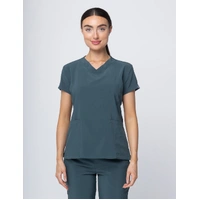
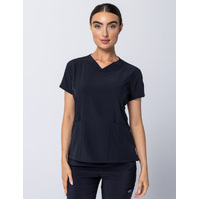
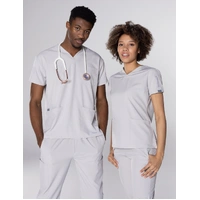
The fabric used for medical scrubs is typically a blend of fibres designed to balance comfort and durability. High-quality cotton is often integrated to provide breathability and ease of movement, which is essential for long shifts at a hospital.
Many brands now offer scrubs that include a mix of synthetic and natural fibres to improve performance. This blend enhances resistance to stains and maintains the structure of scrubs even after numerous washes, ensuring the garments remain reliable and professional.
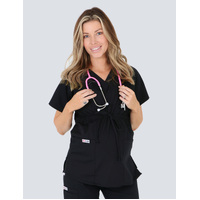
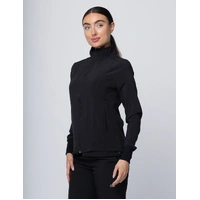
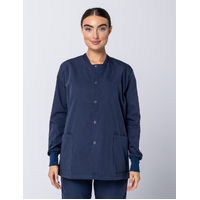
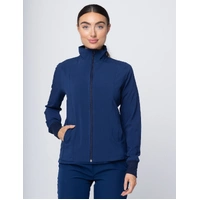
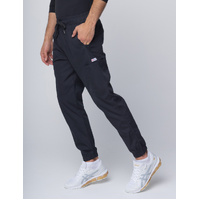
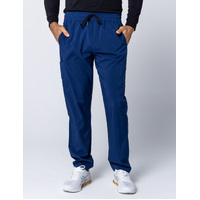
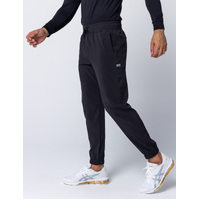
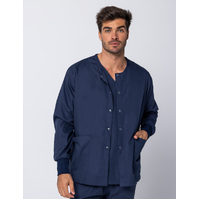
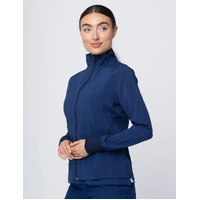
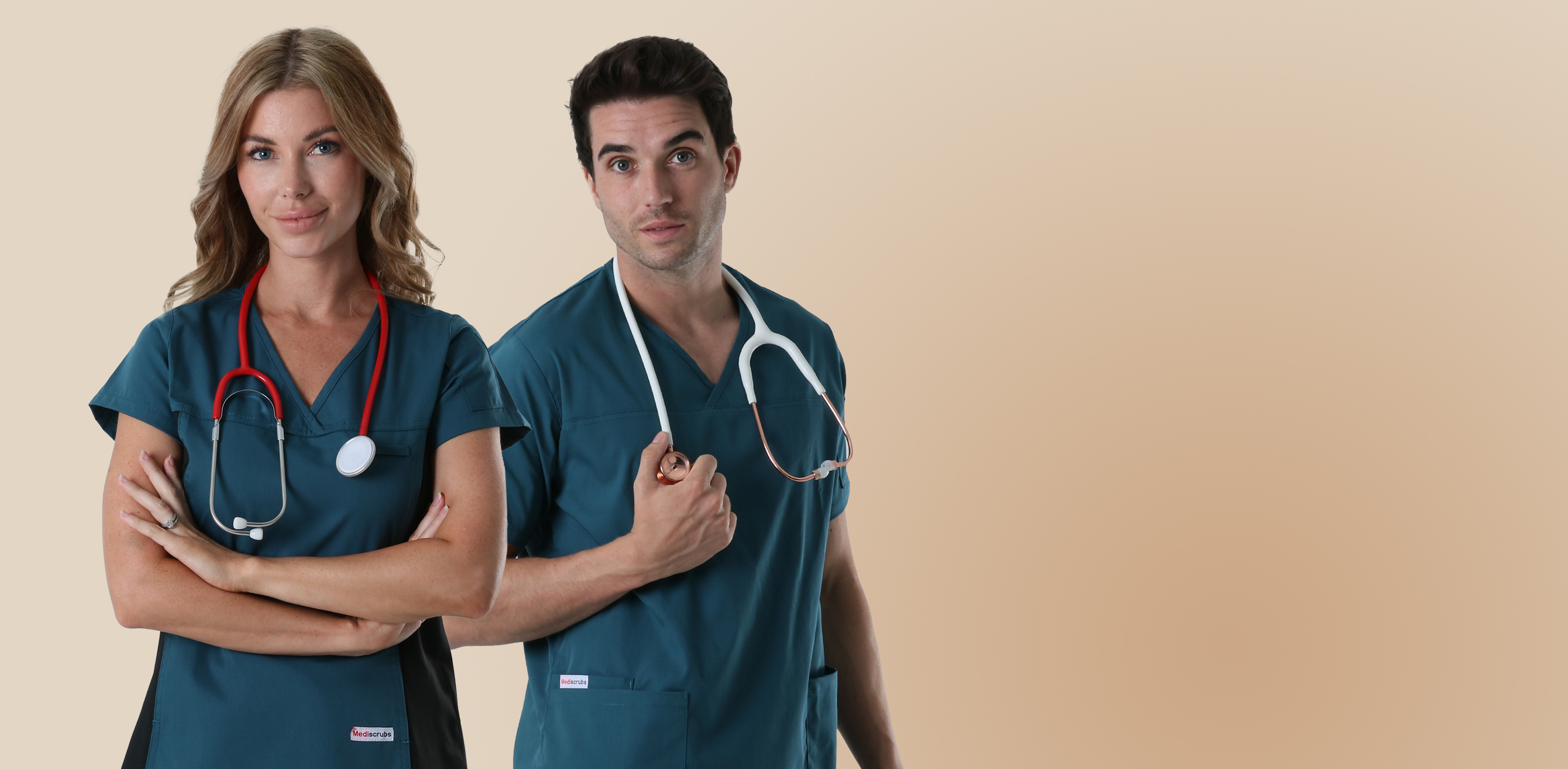
Manufacturers also design scrubs to complement matching jackets for a complete uniform solution. This approach helps both individual practitioners and entire hospital teams work comfortably while maintaining a consistent and professional appearance.
Common Types of Medical Scrubs Fabric
This section outlines key fabric choices for scrubs: traditional cotton, durable polyester, comfortable rayon, flexible spandex, and high-performance blends. It also touches on textures like denim and twill, including tips on using fabric softener. These insights serve buyers in the United States seeking reliable and practical scrubs.
Cotton as a Traditional Choice
Cotton remains a favoured option for medical scrubs due to its natural cellulose content that offers excellent breathability and comfort; its well-known properties help limit bacteria growth and reduce the risk of stain retention, making it a reliable option when paired with rayon blends to enhance performance and durability while keeping an organised cart of scrubs for busy shifts:
| Feature | Benefit |
|---|---|
| Natural Cellulose | Enhances breathability |
| Bacteria Resistance | Reduces odour and contamination |
| Rayon Blend | Improves fabric performance |
| Stain Management | Maintains professional appearance |
| Organized Cart | Streamlines uniform management |
Polyester for Durability
Polyester, a synthetic fibre known for its resilience, ensures that scrubs maintain their shape and resist odour, making them a popular choice among health care professionals. Its consistent performance is further highlighted in durable textiles available in colours such as pink; key benefits include:
- Long-lasting quality
- Maintenance ease
- Effective odour control
- Optimal performance in health care environments
Rayon for Comfort
Rayon provides exceptional comfort in medical scrubs, making it a popular choice for healthcare professionals who require breathable fabrics and consistent performance under various temperature conditions. Healthcare providers can compare the attractive unit price with other options, and some even incorporate festive elements like a Christmas designpaired with a grape-inspired hue, ensuring their uniforms meet both functional and stylistic expectations; inquiries via email are encouraged for personalised guidance.
Spandex for Flexibility
Spandex offers impressive stretch and recovery, ensuring scrubs provide a perfect pattern of flexibility that meets the dynamic needs of healthcare professionals. The integration of fibres like nylon and even pulp elements with spandex ensures a refined colour retention and robust performance during shifts.
Blends for Enhanced Performance
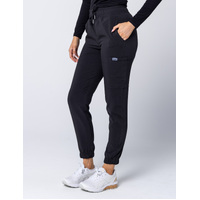
Mediscrubs utilises innovative fabric blends that resist wrinkle formation while ensuring that trousers, badges, and even Cherokee-inspired details uphold a uniform quality throughout a rigorous laundry cycle, providing a reliable solution for healthcare professionals who face demanding shifts:
- Durability that withstands frequent laundering
- Enhanced stretch for optimal movement
- Consistent quality that minimises wrinkles
- Design features that maintain a professional appearance, including well-integrated badge areas
- Practical appeal in fabric that supports trousers and similar garments
Evaluating the Best Fabric for Medical Scrubs
Nursing professionals rely on fabric that offers breathability and comfort while ensuring antimicrobial protection and efficient stain resistance. This section compares polyester with other fibres, reviews durability, highlights moisture-wicking properties, and examines environmental impact. Insights include sewing techniques that improve performance and practical features like a backpack-friendly design for everyday use.
Comparing Breathability and Comfort
Medical scrub fabrics that emphasise excellent breathability and comfort ensure that healthcare professionals stay cool and focused throughout lengthy shifts while also maintaining a professional shape. This approach parallels the comfort found in premium sportswear or a well-fitted shirt, providing the patient care environment with a refined balance of ease and durability that even sparks discussion on platforms like TikTok. Such design insights offer practical solutions for those seeking reliable, everyday performance without compromising on style or functionality.
Analysing Stain Resistance and Maintenance
Industry experts note that high-performance scrubs employ fabrics engineered for stain resistance and ease of maintenance, using materials such as linen and poplin in uniform designs that balance high GSM construction with superior breathability. This approach delivers reliable uniforms that withstand frequent cleaning while ensuring a fresh, professional appearance for healthcare professionals during long shifts.
Assessing Durability and Longevity
Mediscrubs experts assess fabric durability by using practical tests that mirror everyday wear, similar to evaluating a trusted shoe, solid wood, or fine wine, ensuring that the clothing maintains integrity and dye consistency during heavy use:
- Stress tests simulating constant movement
- Repeated laundering to verify stain resistance
- Colour retention assessments to uphold dye quality
- Comparative analysis against traditional wear and tear benchmarks
This method provides reliable insights for healthcare professionals, ensuring that each piece of fabric continues to meet rigorous industry demands over time.
Understanding Moisture-Wicking Properties
Mediscrubs experts evaluate fabric performance by focusing on moisture-wicking properties that keep skin dry and comfortable during long shifts, ensuring that healthcare professionals experience improved ventilation. The fabric absorbs moisture quickly, providing a continuous level of moisture control that enhances both hygiene and comfort throughout the workday.
Considering Environmental Impact
Mediscrubs prioritises environmentally responsible fabrics that reduce the ecological footprint of healthcare uniforms while ensuring durability and comfort. The focus rests on materials with lower energy consumption during production and reduced water use, offering a sustainable option for hospitals and clinics. These fabric choices contribute to a greener supply chain and provide healthcare teams with high-quality scrubs that align with eco-friendly practices.
Making the Right Choice Based on Specific Needs
Mediscrubs considers fabric selection for varied medical roles and work conditions, ensuring each choice meets practical demands. This section reviews personal comfort preferences and the role of fit and functionality in selecting scrubs, offering expert insights for healthcare professionals seeking both reliability and ease during shifts. Visit Mediscrubs for more information.
Fabric Selection for Different Medical Roles
Mediscrubs tailors fabric options to suit the varying demands of different healthcare roles, ensuring that each professional receives attire that matches their specific needs. Designers focus on options that balance comfort, durability, and moisture control, making fabric selection an exact science aimed at optimising performance for long shifts in demanding environments. This strategy meets the practical requirements of dynamic hospital settings, offering professionals tailored solutions that support both rigorous work and patient care.
Choosing Fabric for Different Work Conditions
Mediscrubs experts emphasise selecting fabric that meets the diverse demands of various work conditions in healthcare settings, ensuring that each scrub supports constant movement and maintains a professional look. They offer practical insights based on thorough testing and real-world experience, guiding buyers to choose durable, moisture-wicking materials that deliver reliable performance during both intensive and routine shifts.
Evaluating Personal Comfort Preferences
The ability to customise fabric selection based on personal comfort plays a vital role in achieving optimal performance during long shifts; healthcare professionals value scrubs that combine breathability, moisture-wicking capabilities, and flexible stretch for uninterrupted movement:
- Breathable fabric for sustained comfort
- Moisture-wicking properties for dryness
- Flexible stretch to support active movement
Importance of Fit and Functionality
Mediscrubs integrates precise tailoring with useful design to guarantee each scrub meets the practical demands of busy healthcare settings. The focus on fit ensures that scrubs support constant movement while maintaining a neat profile, and functionality translates into garments that perform reliably across varied work conditions. These elements provide healthcare professionals with a refined option that addresses both comfort and active performance during long shifts. For more information on their offerings, visit Mediscrubs.
Care and Maintenance of Medical Scrubs Fabric
This section covers essential washing guidelines for various fabrics, recommended products for proper fabric care, and effective stain removal techniques. It offers practical insights for maintaining medical scrubs, ensuring long-lasting performance and hygiene. The following details provide clear instructions to keep uniforms in top condition throughout intensive use in healthcare environments.
Washing Guidelines for Different Fabrics
Mediscrubs advises healthcare institutions to follow fabric-specific washing guidelines to preserve the integrity and appearance of medical scrubs; washing cotton blends, polyester, or spandex-based fabrics in cold water with a gentle detergent helps maintain colour and shape, reducing wear over frequent washes:
| Fabric Type | Washing Practice |
|---|---|
| Cotton Blends | Cold water, gentle cycle, mild detergent |
| Polyester | Cold wash, low spin, avoid harsh chemicals |
| Spandex | Hand wash or gentle machine cycle, line dry |
Recommended Products for Fabric Care
Industry experts recommend specialised fabric cleaners and gentle detergents to maintain the integrity of scrub fabric care, ensuring long-lasting durability and professional appearance for healthcare uniforms:
| Product | Purpose | Feature |
|---|---|---|
| Fabric Cleaner | Deep cleaning | Preserves colour and texture |
| Gentle Detergent | Prevent damage | Mild formula for constant use |
| Stain Remover | Targeted cleaning | Effective on common stains |
Stain Removal Techniques
Mediscrubs experts suggest targeted stain removal by applying a gentle pre-treatment to affected areas, followed by a careful wash with a mild detergent to preserve fabric quality and maintain colour uniformity: Mediscrubs
| Technique | Recommended Usage | Benefit |
|---|---|---|
| Blotting | Use a clean cloth to remove excess liquid | Prevents stain from setting |
| Pre-Treatment | Apply a gentle stain remover directly on the stain | Boosts the effectiveness of subsequent washes |
| Cold Wash | Wash with cold water and a delicate detergent | Preserves fabric integrity and colour retention |
Future Trends in Medical Scrubs Fabric
Mediscrubs highlights emerging fabric technology, sustainable options, smart textiles, and customisation trends. Innovations in fabric technology improve durability and comfort, while eco-friendly choices reduce environmental impact. Smart fabrics broaden functionality and hygiene, and new personalisation trends offer tailored solutions to meet specific professional needs.
Innovations in Fabric Technology
Mediscrubs leads with advancements in fabric technology that boost durability and improve comfort for healthcare professionals. The company focuses on materials designed for stain resistance and moisture control, ensuring that scrubs perform reliably over long shifts. These innovations address key pain points for hospitals and clinics by delivering high-quality, functional uniforms that support everyday performance.
Sustainable Fabric Options
Sustainable fabric options in the medical apparel industry introduce eco-friendly materials designed to lower environmental impact while ensuring the durability and comfort essential for healthcare professionals. These innovative textiles offer benefits such as decreased water usage, low energy production methods, and reliable performance during extended use:
- Reduced resource consumption
- Improved moisture management
- Enhanced fabric longevity
- Lower environmental footprint
The Role of Smart Fabrics in Healthcare
Healthcare providers benefit from smart fabrics in scrubs, which incorporate sensors for monitoring temperature, moisture, and other vital data during long shifts. These advanced textiles address pain points such as discomfort and inefficient performance monitoring by offering immediate feedback to improve safety and efficiency during daily operations:
| Feature | Benefit |
|---|---|
| Temperature Regulation | Ensures comfort during shifts |
| Moisture Control | Keeps wearers dry and comfortable |
| Sensor Integration | Provides real-time performance data |
Customisation and Personalisation Trends
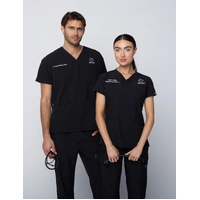
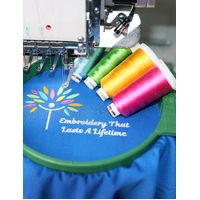
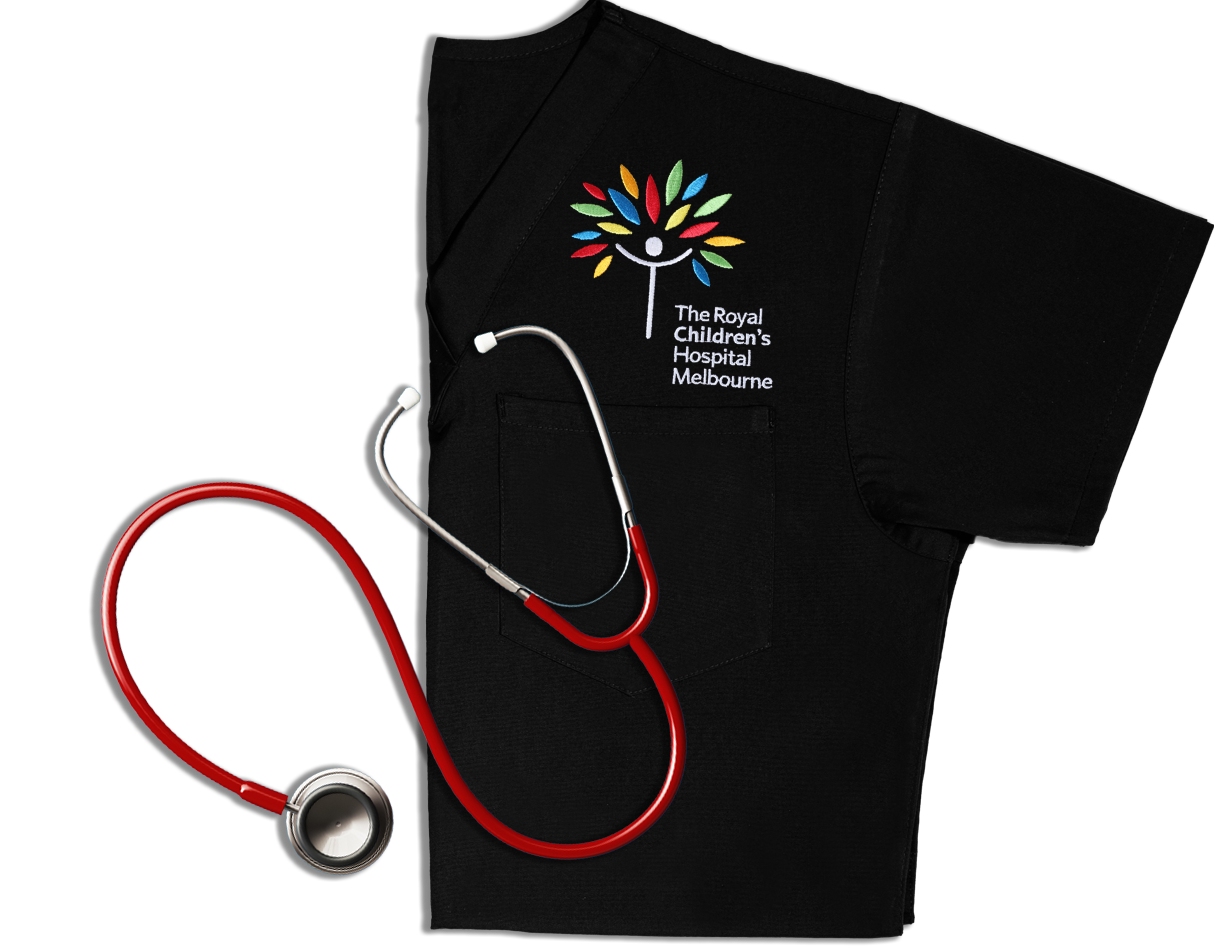
Mediscrubs pioneers customisation trends by offering unique embroidery options that allow healthcare institutions to personalise uniforms with logos and distinct designs, thereby reinforcing brand identity while addressing practical needs. This approach offers healthcare professionals the opportunity to tailor their attire, ensuring both aesthetic appeal and a comfortable fit that supports long shifts. Their process is built on real-world testing, allowing for adjustments that meet daily operational challenges effectively.
Conclusion
Selecting the ideal fabric for medical scrubs plays a crucial role in ensuring comfort, durability, and performance for healthcare professionals. Each fabric option meets different needs, from moisture control to stain resistance, which supports both everyday wear and intense shifts. Tailoring the choice based on professional requirements improves uniform performance and workplace satisfaction. Healthcare institutions benefit from a comprehensive approach that delivers reliable, high-quality scrubs that boost functionality and confidence.